
Home / Tennis court resurfacing
Resurface A Tennis Court Without Pouring Acrylic Again
Every acrylic tennis court eventually cracks, fades and needs resurfacing - and every resurface means days of closure, odour and cost. Laying interlocking PP tiles over the existing court skips the grind and gives you a surface that drains and never needs repainting.
- Lays over the old court, no demolition
- No acrylic, no odour, no closure days
- Lines as colour panels - never repainted
- Drains, so play resumes minutes after rain
The acrylic resurfacing cycle
A traditional acrylic tennis court is a sandwich of fill coats over asphalt or concrete. Sun, freeze-thaw and tree roots crack it; the colour coat fades; and every few years the whole surface is scraped, patched and recoated. Each cycle closes the court for days and costs real money. Clubs with several courts feel this on rotation forever.
Tiles over the old court
Interlocking PP tiles are laid directly over a sound existing acrylic or asphalt base after minor patching. There is no grinding, no wet coat and no cure time - the court is playable the same day the last panel clicks in. Cracks that have been stabilised underneath simply stop mattering because the tile bridges them. See the base requirements in our subbase guide.
Lines without paint
Tennis lines are produced as coloured panels, so the court carries singles, doubles and even pickleball lines at once. When the programme changes, you swap a few panels instead of closing for a repaint. For multi-use options see our MUGA guide.
When tiles beat a repaint
Tiles are the stronger choice when a court drains poorly, when you want to add multi-sport use, or when closure days are expensive. If the existing base is severely heaved or rooted, a full rebuild is still right - but for the typical faded, lightly cracked club court, tiles are faster and cheaper. Compare with a new tennis court build →
Specifications
| Recommended panel | 500 x 500 mm heavy duty (club) - 340 mm (budget) |
| Thickness | 15 mm / 16 mm |
| Material | 100% virgin polypropylene (PP) |
| Surface | Textured anti-slip, matte or diamond |
| Line markings | Colour panels: singles, doubles, multi-sport |
| Drainage | Perforated base, playable minutes after rain |
| Over old base | Lays on sound acrylic/asphalt after light patching |
| Certification | RoHS / REACH; SGS tested |
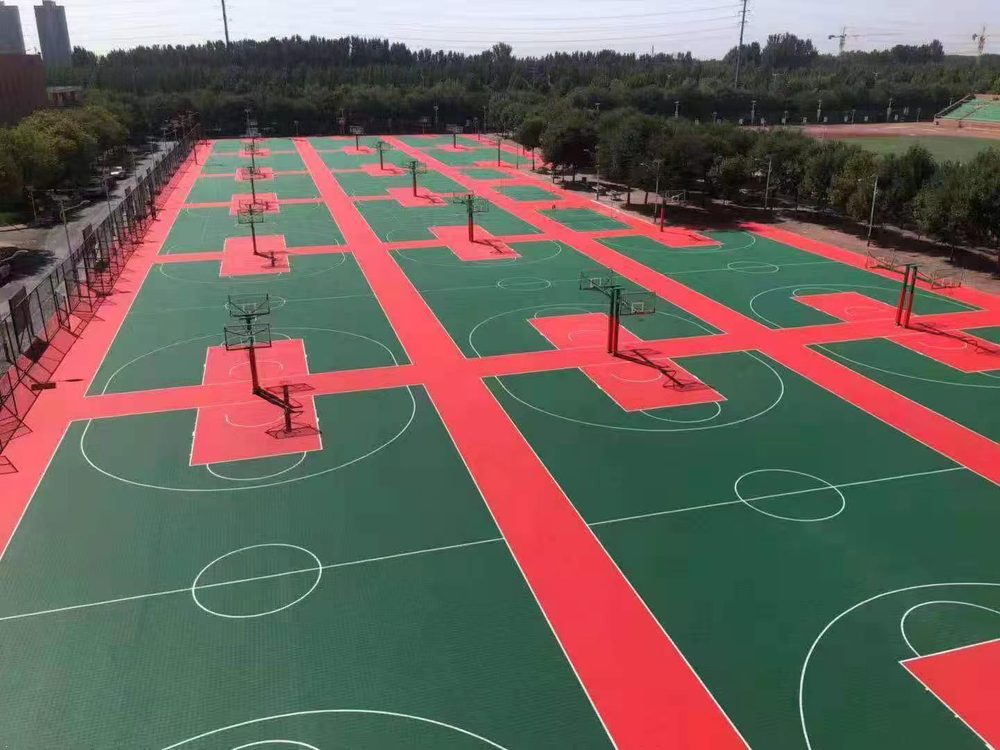
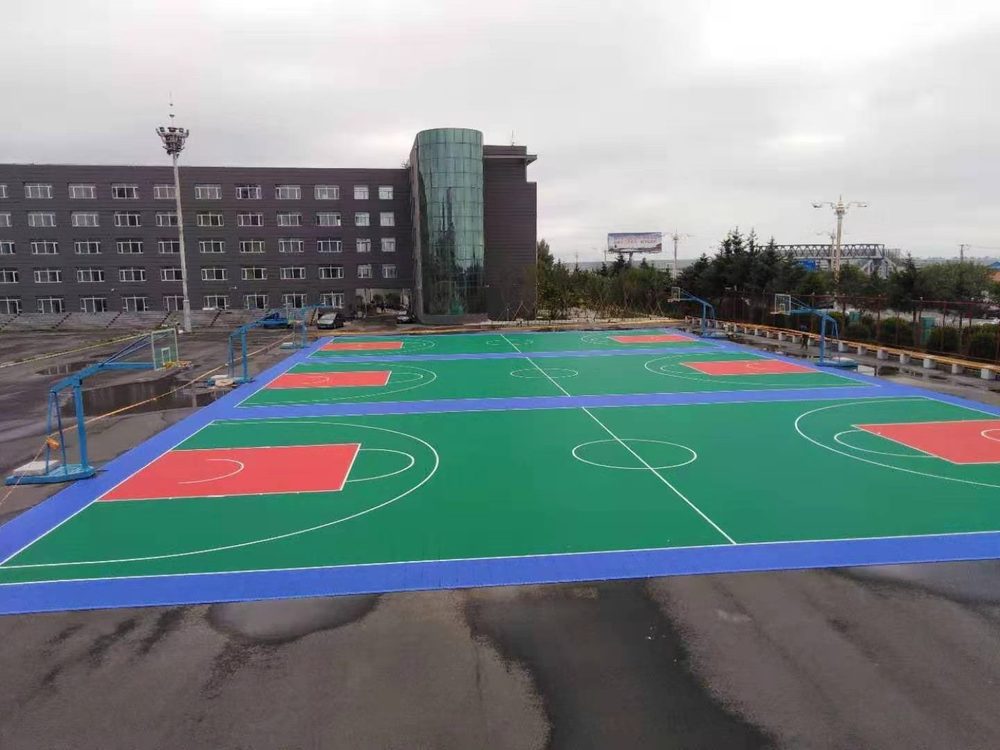
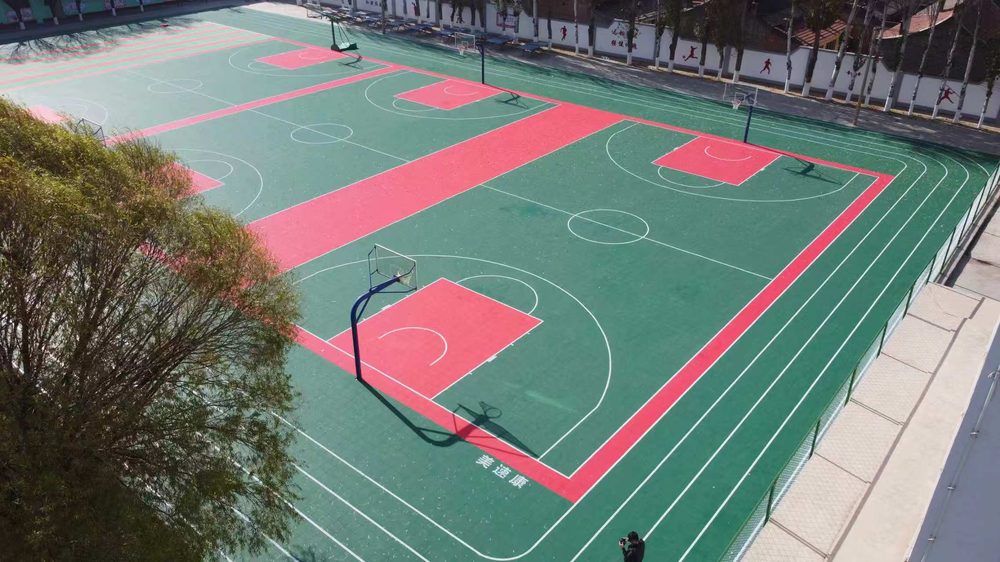
Project photos
Frequently asked questions
Can you put tiles over an existing acrylic court?
Yes, provided the base is sound after light patching. The tile bridges minor cracks so they no longer affect play.
How long is the court closed during resurfacing?
Typically the same day. There is no wet coat or cure time, so play resumes as soon as the last panel is clicked in.
Do the tennis lines fade or need repainting?
No. Lines are coloured panels moulded into the floor, so they do not fade or need repainting like painted acrylic.
Is a tile court as fast as acrylic?
The surface plays true and consistent; speed is tuned by the tile texture you choose. Many clubs prefer the all-weather grip over a slick acrylic in wet climates.
Related pages
Get a quotation within 24 hours
Send your court size, application, colour requirement and destination port - we reply with pricing, a free layout drawing and the exact panel quantity.